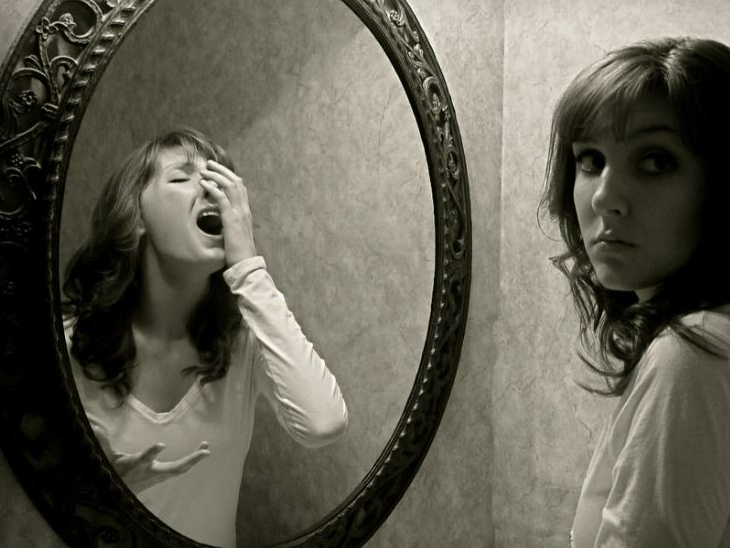
Mirror, mirror, on the wall, who is the fairest of them all? As the saying goes from the fairy tale, Snow White and the Seven Dwarfs. The line is said by the wicked Godmother, who is vain and jealous of the young beauty, Snow White. The mirror shows her reflection and she sees in it what she wants to see – that, for a while at least, she is the fairest of them all. However, what we see in our own mirror is not always our true self either.
Whilst developing as a leader I was often asked to ‘reflect’ on what I wanted to achieve, reflect on the results of some feedback, what ‘leadership shadow’ I wanted to cast and what style of leadership I wanted to express. I had 360-degree feedback, aimed at finding and ‘exposing’ my blind spots. There was a long chain of Hogan reports, MTBI based sessions, Firo-B exercises, Situational Leadership II sessions, all designed to develop my professional ‘prowess’. I filled in surveys, studied the results, nodded my head at feedback, engaged and questioned the development coaches, and all in all, I did just that, I looked in the mirror and reflected.
However, my image of ‘self’ was already distorted. As I have discussed in some of my other articles ‘An imposter called Frank‘ and ‘Rubik’s cube‘ there was lingering imposter syndrome, self-doubt and confidence issues, as well as other matters which needed to be taken care of first. To return to the Snow-White analogy, it was that the reflection was distorted.
I was ‘masking’ .
Many people mask and the reasons for masking are many. Wanting to fit in, to get a job, and make friend are all mentioned as possible motivations for actively wanting to camouflage one’s ‘true self’. I had for most of my life, tried to fit in with the ‘normal’ world by mimicking other people. I used my intelligence to decipher social rules and situations and rehearsed scenarios and conversations in my head, repeatedly, like a broken record. I’d go over a situation that didn’t go as planned and analyse every part, trace back my ‘mistakes’ and think about other ways of doing and saying things.
However, as the mask builds up, it can have a negative impact on your confidence, as it did mine. I thought if people found out who I really was, they wouldn’t like me. If I ever let my mask slip, they would never speak to me again, because they would realise what a social weirdo I was, or that I was unable to do my job. It also takes a lot of energy to actively analyse all social situations to find out what to do. As such, exhaustion, or burn out, is one of the most frequent results from masking. Masking at work, for example, every day will eventually make you hit the proverbial ‘wall’. Further, if you’re neuro-diverse and very good at masking, you also risk not getting a full diagnosis until you’re well into adulthood. You might struggle to be taken seriously if you try to discuss ‘issues’ you have in your social life, because to the outside world, you seem to cope with everything naturally.
So if this resonates with you, what to do about it? Understanding that this is what might be going on is a really good start. Following this, here are my top 4 things to think further about:
- Understand your true self. Self reflection will be a powerful tool in your unmasking armoury.
- Love yourself, as well as those around you. Self love and self care are probably the most important elements in building back lost confidence. People who love you for who you are, whatever, will still love you (perhaps even more so), if you are your ‘truer’ self. Moreover, it is usually vey difficult to let those who truly love us into our lives, if we do not love ourselves first.
- Acceptance of who you are. After self reflection and self love comes acceptance, that is being ok in your own skin, being ok with who you are, your imperfections and having the confidence to let that vulnerability show to those around you.
- Be patient, peeling away the mask and finding your more genuine self is not going to happen overnight. Years of built up habits cannot be peeled back in an instant.
Lastly, and perhaps most importantly, you shouldn’t forget that having the support of someone you love (such as friends, siblings, or even a professional1) will help you stay strong until you finally manage to peel back all the layers of your mask.
Allowing you to see a true reflection of that beautiful person you are.
[1] As I have stated a number of times, I am not a mental health expert (or indeed have had any training at all in any related matters), so if you do need more help, please talk to someone who is, such a therapist, or counsellor. In the UK, you can get help via a referral from your GP to the NHS Well-Being Service (although it does take a while, it is worth it). If you want to go privately, or don’t have access to the NHS, I recommend you start with a registered practitioner, and in the UK the BACP is one of the largest professional membership bodies.
 All Things Bright and Beautiful...
Hello Suzanne.
Your posts are infrequent, but always worth the wait!
My one comment is as follows:
“Recognise that as our masks gather layer after layer, the weight makes our heads drop more and more, our shoulders droop and our spirits lower, as we spend more time looking down than up. Freeing ourselves from that mask allows us to breath, to look to the stars, and become the person we have always been, only out in the open and not hidden within our internalised world.”
Thank you for your candid honesty and words written with true feeling. I look forward to your next instance of testing what exposure can feel like. It is not all bad, and often strangely liberating, as I have found myself.
Bravo!
LikeLike
Thank you so much Laurence! As ever, very kind words and I absolutely love that sentiment, it might even inspire my next article, though there are others in the planning, you’ll be pleased to hear 🙂
LikeLike