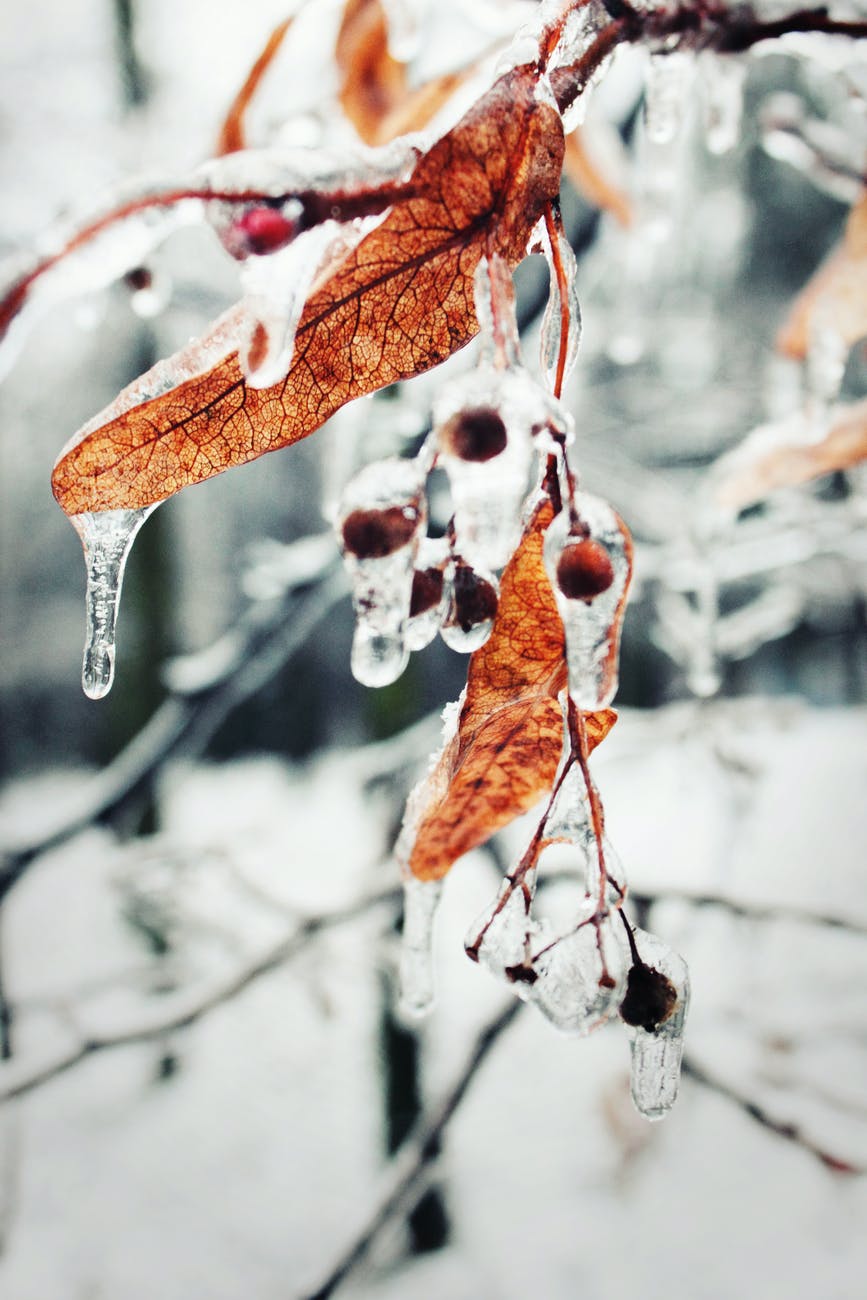
Please note this article, for some, may trigger sad (even SAD) thoughts. However if these are not thoughts you wish to have triggered at the moment, I really won’t be offended if you avoid this particular blog, it’ll be here later when you are ready, I promise. I’ll also state up front I’m absolutely no expert on any of the topics covered, so if you need expert advice – err… go to an expert! These are just my thoughts on perhaps what lessons Winter can teach us as humans.
So again, being upfront on this, Winter is my absolute favourite season of the year, closely followed by Autumn. Spring next, summer last. This order has a tendency to shock and surprise some people, especially some of those of my closest family members who find winter an utterly and totally miserable affair, only to be survived by constant thoughts and imaginings of a (very) hot summer’s sun. Even Christmas, which is almost upon us as I write this, has lost its sparkle in recent years, not just because of Covid, but because all the little ones in my family have grown up into moody teens, (though it has to be acknowledged that some are peaking out the top end of that spectrum and are settling into adulthood quite nicely, but please don’t tell them that).
So if you don’t immediately go “Winter’s mine too!’, then I guess you may need some persuading. Again I have to admit in all transparency that my birthday happens to be in Winter, though this perhaps unconsciously has skewed my view, it’s actually very near Christmas which in itself is a right royal pain in the arse. However despite Christmas, despite my birthday, I still maintain that Winter is a special season. The most special.
It’s taken me a while to work out why I love winter so much, but before I go into those reasons and the lessons Winter may bring, I’m gonna indulge in a slight bit of science. I think Prof Brian Cox once explained this far far better than I in one of his programs and this is very much from memory, but here goes. Our planet is a perfect distance away from the sun to support life. That distance regulates the temperature of our water bodies, weather patterns and makes it a perfect planet to support life, because it receives the perfect amount of heat and light to allow life to be created and thus, nurtured. The rotation of the earth around the sun, that maintains this distance, is due to gravity and thus provides these necessary conditions. That rotation gives us our seasons, for when its winter the Northern hemisphere, its summer in the south etc etc.
So without winter, no summer. No life, no plants, no Christmas. Simples.
So why should we love rather than just bear Winter and what lessons can it bring for how we might see and cope with life? The best example I can find to support my hypothesis is of my two lavender bushes. We’ve lived in our current house for just over 20 years and have spent a lot of time and energy trying to cultivate our tiny little plot of a garden into something half decent. I love lavender for three main reasons, one it’s smell reminds me of my honeymoon in Provence 20 years go. Two, it’s supposed to be pretty hardy and easy to grow and three, its also a favorite with the bees (’nuff said).
Problem is when I tried to grow it in early versions of my garden, after it had flowered, in autumn and winter those flowers would naturally, wither, die and drop off the bushes. The next Spring however, rather than coming back in abundance, the branches grew woody and struggled to grow such blooming lovely flowers again. This happened a couple of years in a row until I gave up trying. A couple of years later I asked someone (can’t now recall who) how they managed to grow such wonderful lavender every year and they told me how. Once the flowers are gone and weather has turned cold, you need to prune the branches back almost to a small round stump, as far back as you can, smaller than a football for sure. Ok, not being a green fingered gardener, I thought this seemed a bit odd, not very ‘logical’, but I decided to give it a go and unsurprisingly, whilst it seemed harsh, a crime against the lavender bush while I was doing it, it worked. Not only did it work, it worked beautifully, and if done well (sometimes I’ve rushed the process), often results in larger and larger flowers each year.
It still amazes me as I cut the branches each winter that nature is designed this way. That some flowers and bulbs need a frost in order to signal that they must hibernate ready for the following year. That we must lose something we think is beautiful in order to gain something much better. That when I look out at the ‘miserable’ rain, fog, sleet and snow from my window, that the water that is falling from the clouds in the sky is not there just to annoy us, but is there as a natural part of the seasons to replenish the water that’s used in the spring and summer months to produce flowers, food and life.
That the lack of leaves on the trees that may mean they look ‘bare’ to us means they have instead fallen to provide ground cover, that ground cover providing shelter for insects and small creatures. Providing the lining for nests for birds and small mammals who’s hibernation over the winter means they will, or won’t, survive into the following year. And when finally gone, have provided the much needed mulch and nutrients back into the soil ready for the following year.
Moreover, that very specific stillness you get on a true mid-winter day, provides the calm in my mind to slow down, to rest, sleep and relax and to come back renewed and refreshed in the Spring. To emerge from my own hibernation of thought, back into life anew.
Indeed, I would argue, Winter provides us with the greatest lessons of all.


I don’t have a favourite season – I appreciate every one of them. However I do think you may have accidentally performed some sleight of hand – you said No winter, No summer, No life. Which isn’t strictly speaking true. No seasons would probably be way less interesting but still viable?
LikeLike
Hi Chris, thanks ever so for reading my article and moreover, taking time to comment. Yes, you got me, I definitely took a liberty in my argument to prove a point 🙂 To be honest though I have no idea, but you pose a really interesting question, what would life be like without seasons? Would there be some life, would it be human? Indeed what is life? I think we are definitely seeing a change in our seasons and weather patterns, through climate change, whether it be man made or natural, or a combo of both. That will surely disrupt our way of life, but will it end, probably not for many millions of years, though we can’t know for sure – at least right now. I guess we’ll have to adapt, which won’t be easy, but we’re pretty good at that, having been around of this earth for a while now. As I said I’m not the expert, but it really has been interesting to think further about this, so thank you again! Kind Regards, Suzanne
LikeLiked by 1 person