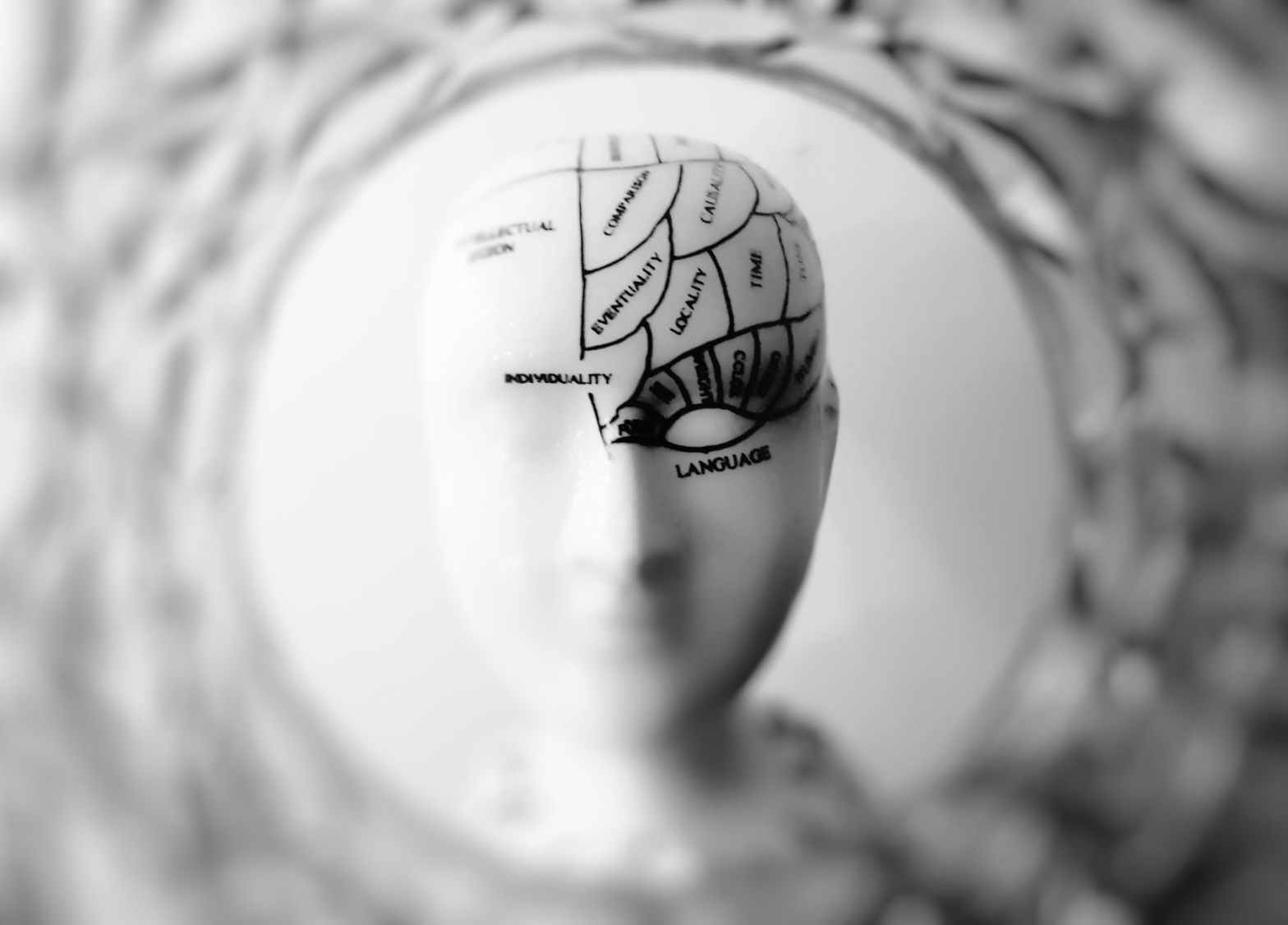
What is neuro-diversity and why are women different?
Many people have discussed this topic far better than I could – in particular I recommend Christine Lions and Temple Grandin’s books in this area. In her book, Christine Lions particularly explains why, or how autism is differently expressed in women:
“Women are in general better at imaginative play, have different special interests than most boys, and can be very good at learning social skills. But in addition, women score lower on executive functioning and can have more difficulty with friendships (Kirkovski et al., 2013).”
What I will say after all my googling and reading is this : that Neuro-diversity is a life-long difference in how our brain works, and this causes neuro-diverse individuals to both act differently and experience the world in a different manner than others, commonly known as ‘neuro-typical’.
Indeed, Laurent Mottron states that autism should be described as “simply a variant within the human species” (Mottron, 2011). As I discuss later, calling it a “disorder” (the dis pronoun as in dis-ease, despair etc (Latin) belies the complexity of the neuro-diverse spectrum and does those who wish to live a regular life, a “disservice”. Indeed, if one looks at the origins of the word disorder, is comes from the Latin for “not” (dis) and “order”. By the 1520s, it was used to mean the “lack of regular arrangement;” by the 1530s, “tumult, disturbance of the peace;” from disorder (v.). The later meaning “an ailment, a disturbance of the body or mind” is in full use by 1704.
However the word was originated, I would argue for many who are still able to go about their every days lives, it is very far from an ailment, a disturbance of the body or mind. In the more severe cases, I do understand that there are more difficulties in leading a normal life, and in the extreme cases, far from normal. However in her book “The autistic brain” Temple Grandin argues, very succinctly, that even the most with severe sensory struggles, those with autism can lead a fulfilling and happy life. I have no experience of what it is like to parent a child with severe autism, so I am not belittling the everyday struggles, just trying to remove the stigma of the name from the individual.
Many authors, including Lions, Grandin and Mottron even go so far as to propose autism has allowed some individuals to developed ‘super-powers’, defining these beyond the more well know geniuses or savants in maths and music for example. It has scientifically proven that some people on the spectrum have a superior ability to identify and remember pitch and melodies ( (Stanutz, 2012) (Heaton, 2003); Bonnel et al., 2010; Jones et al., 2009).
Women in particular, are known for being good at “masking” their symptoms by learning how to consciously change their behaviour and mimic others. Some even mask their symptoms so well that they’re never diagnosed, or they’re diagnosed very late in life. This is especially the case for women without any types of learning disabilities. As they often use some of their intellectual capacity to analyse social situations and make conscious decisions to act in a certain way that’s more ”socially acceptable.” Indeed, masking is something I am particularly good at (it’s one of my super powers).
Such women will often not be discovered until they’re so exhausted from all this extra brain work that they collapse. This has a name, and it’s called ”autistic burnout.” But even when women seek help for this, they’re more likely to be diagnosed with something else. Popularly, women are diagnosed with eating disorders, depression, social anxiety or bipolar personality disorder, because so many professionals fail to recognise that autism is the cause of their symptoms (Lions).
Is it on the increase and isn’t everyone just a bit weird sometimes?
This topic is also discussed heavily in all the prior books mentioned and Christine Lions in particular discusses it in her book:
“So more and more people are getting diagnosed as autistic, but that doesn’t mean autism is becoming more common now than it was before. In fact, I think many people, especially women, still remain undiagnosed. But with more people getting diagnosed than before, is there any truth to the statement that ”we’re all a little autistic”? Several people who aren’t defined as autistic might share some of our issues. For example can you have sensory sensitivity without being on the autism spectrum. The problem with stating that you’re ”a bit autistic” is that you’re invalidating the struggles of someone with autism. It doesn’t mean that I think people shouldn’t be allowed to have the same kind of support or resources for their issues, but I hope they consider how it makes an autistic person feel if they say that everyone is autistic in some way. I also realise that for some people, saying that everyone has autistic traits is their way of saying they think they’re on the spectrum too. It can be a way of dipping their toe into the water to see how it feels. Maybe they suspect that they’re on the spectrum, but are afraid to look into it. “
It’s a complicated topic for sure and much is not known still. However, I do think we all need to be more inclusive of the needs and feeling of others and the internal struggles that everyone goes through in their lives. Taking the time to really understanding of what it might be like to live in another person’s shoes is a predominant factor in the #BLM and BAME moment of 2020, after the unfortunate death of George Floyd in the US. Earlier with the #metoo movement and the subjectification and abuse of (mainly) male dominant power with regards to women. It is also starting to happen with the recent vocalisation of mental health issues by famous footballers such as Rio Ferdinand, as well as both of the UK Princes Harry and William after the death of their mother, Lady Diana.
We have a long, long way to go on any of these topics, however being an eternal optimist (and quite diversely, I’m also very much a fatalist), I have hope that one day we humans will accept and love each other for our differences, not in spite of our differences. For the alternative fills me, as it has others, with horrifying dread – indeed how boring would life be if we were all blond haired, white, blue eyes and of ‘perfect’ athletic build?
Personally, I’ve had more difficulty talking about this topic to people who don’t understand what it’s really like, but who thinks it’s a “disability”, or “problem that needs fixing”. Almost treated as someone who admits for the first time, they have HIV, or AIDs. Which is why I hope talking about the topic openly can start to help address.
 All Things Bright and Beautiful...